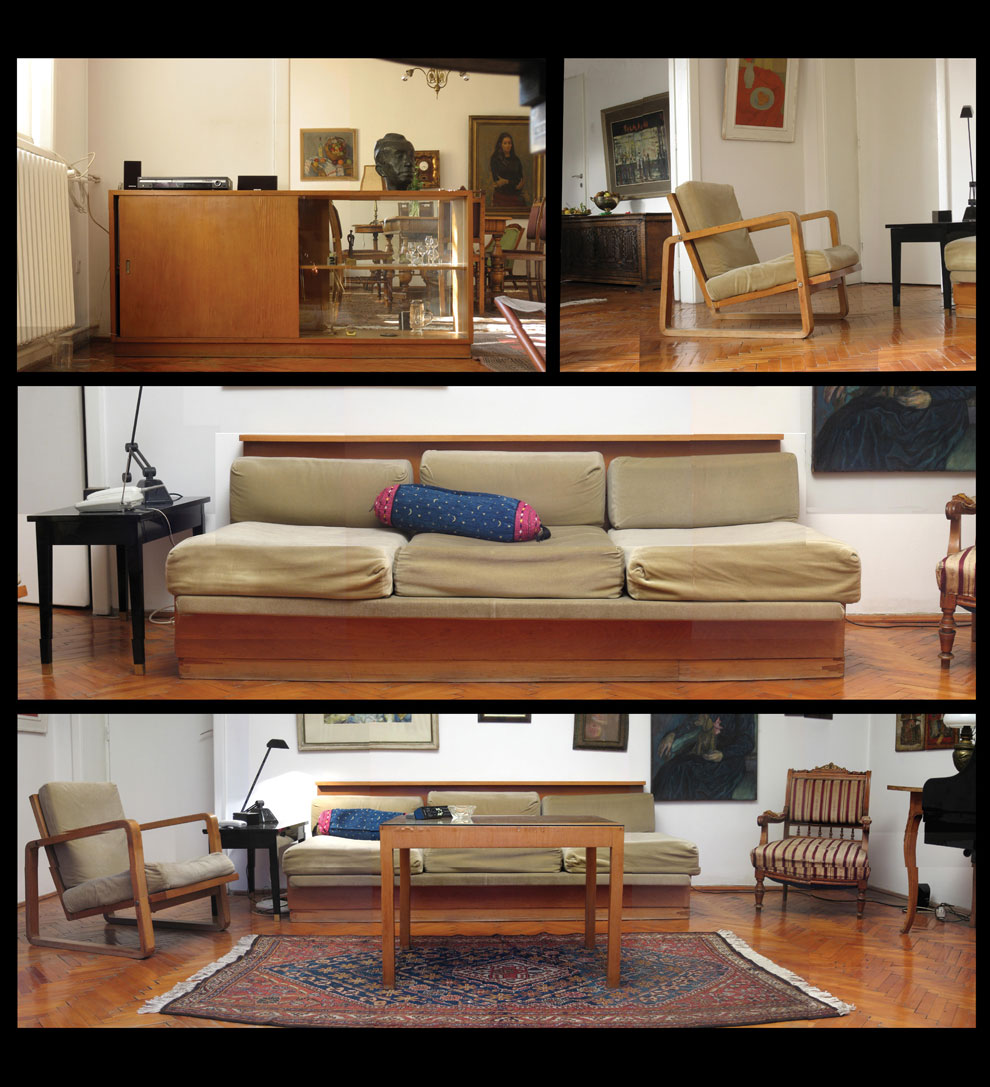
Along with socially engaged art in the fine arts of Bosnia and Herzegovina, primarily expressed in the
works of Roman Petrović and especially in his cycle of paintings "Children on the Streets", and Vojo
Dimitrijević, with his painting "Spain" done in 1937, the most important artistic trend of the period was
modernism in architecture and design. The most prominent figures were the Prague students -
brothers Reuf and Muhamed Kadić, as well as Jahiel Finci, who would, by mid-20th century, pave the way
for the development of modern architecture in the country. In 1939, Juraj Neidhart, who was a disciple
of Peter Behrens in Vienna and who later collaborated with Le Corbusier, came to Sarajevo.
After the Second World War, together with Dušan Grabrijan, he initiated what would become known as
"the Bosnian style in architecture".
Independently from them, the Srebrenica-born Selman Selmanagić, obtained his education at
Bauhaus and graduated there in 1933 (as the great school's 100th graduate). He thus became the first
student from the Balkans who completed his studies at this school. His life journey and his creative and
pedagogical career in the domains of design and architecture were mostly linked to Berlin and (after
WWII) to East Germany.
